

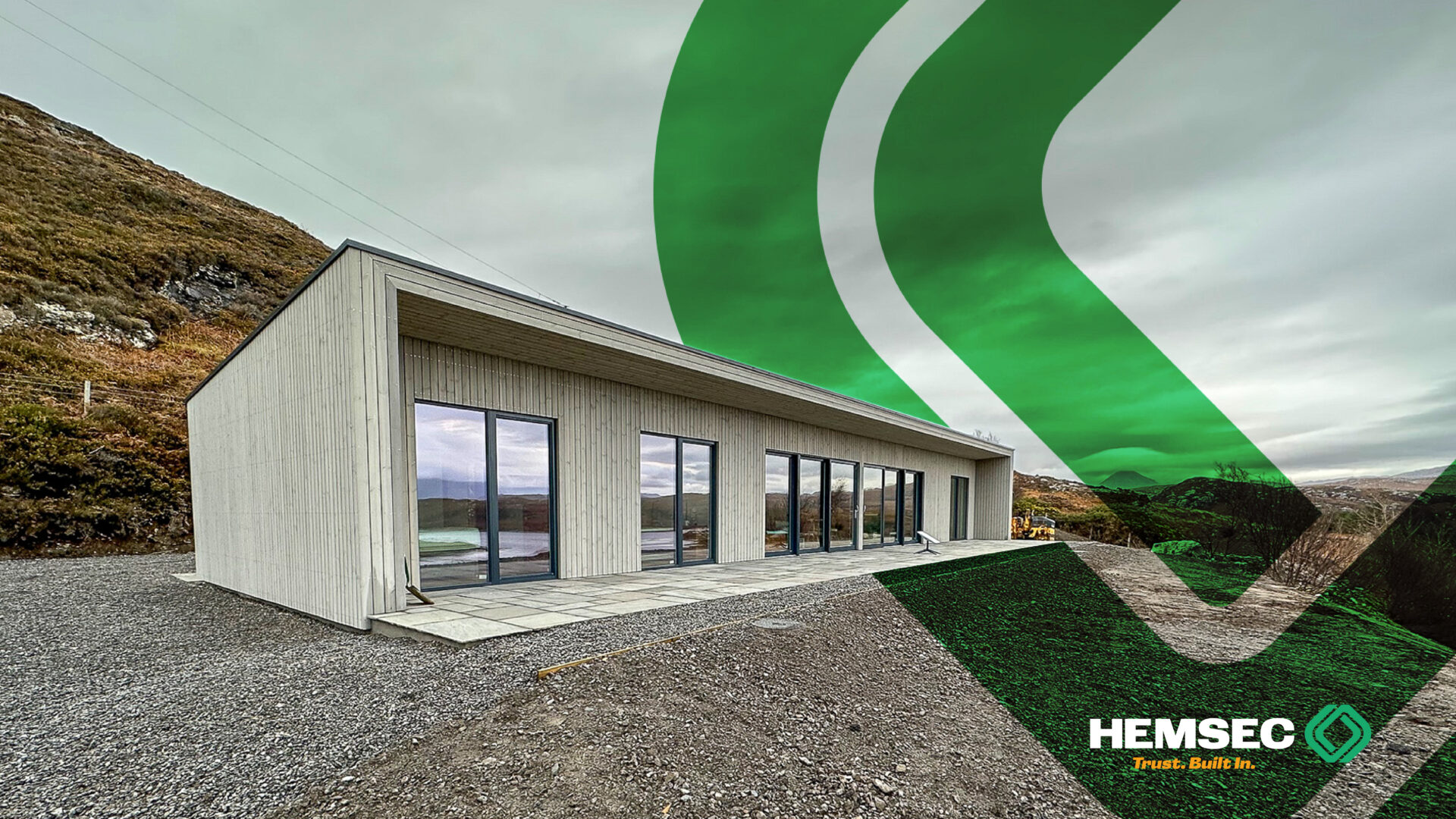
What are SIPs Panels?
Structural Insulated Panels (SIPs) are engineered building panels that combine structural and insulating properties within a single prefabricated component. Manufactured offsite, SIP panels can provide high levels of thermal performance while supporting a fabric-first approach to building design.
Understanding how SIP panels work is just the starting point. Choosing the right system also means considering panel construction, thermal performance, certification, manufacturing quality and technical support.
Here, we look at how SIP panels work, their key benefits and what to consider when choosing a system and manufacturer.
How are SIP panels made?
Structural Insulated Panels are composite insulated panels manufactured offsite, combining structural facings with a rigid insulation core. Hemsec SIPs use an injected closed-cell polyurethane rigid foam core between structurally rated OSB/3 boards. This combines framing, insulation and sheathing within one prefabricated component.
Hemsec SIPs can be used for wall and roof structures across residential and commercial applications, either as load or non-load-bearing structures depending on the application and design.
SIPs are recognised as a Modern Method of Construction (MMC), with offsite manufacture moving more of the construction process into a controlled manufacturing environment before panels reach site.

How do SIP panels work?
The performance of a SIP comes from the combination of its structural facings and insulation core.
Once manufactured, individual panels are connected to form part of the building structure. Because framing, insulation and sheathing are combined within a prefabricated component, SIPs can reduce the number of separate construction processes required on site.
The insulation also forms an integral part of the panel. Junction design, panel joints, openings and penetrations therefore need to be appropriately detailed and sealed to achieve the required thermal and airtightness performance.
What are the benefits of SIPs?
High thermal performance
Thermal performance is one of the principal benefits of SIPs.
The insulation core is incorporated directly into the panel rather than being installed as a separate layer during construction.
Hemsec manufactures SIPs in a range of thicknesses to suit different project requirements, allowing the appropriate specification to be considered against the thermal and structural requirements of the building.
Their thermal performance makes SIPs well suited to a fabric-first approach, where the performance of the building fabric is considered from the beginning of the design process.
Faster construction on site
SIP panels are manufactured offsite before being transported to the construction site, where the panelised system can be erected quickly.
Combining framing, insulation and sheathing within one prefabricated component reduces the number of separate processes required to create the structure on site.
For developers and contractors, this can support quicker build programmes and allow follow-on stages of construction to begin sooner.
Consistent factory manufacture
Manufacturing SIP panels in controlled factory conditions provides greater control over panel production before products arrive on site.
Consistency is particularly important where multiple panels need to connect accurately across a structure.
This is also reflected in feedback from Hemsec customers. Apple Cast North-West, which has purchased SIPs from several UK manufacturers, identified consistency of sizing as one of the reasons it uses Hemsec SIPs.

Maximising internal space
Thermal performance needs to be considered alongside the overall wall construction.
Hemsec SIPs combine structural and insulating properties within a relatively slim panel system, helping to maximise the internal space available within the overall building footprint.
For residential developments in particular, the relationship between thermal performance, wall thickness and usable internal space can therefore become an important part of the specification decision.
Supporting airtight construction
Airtightness is another important consideration when assessing the thermal performance of a building.
Dwellings incorporating SIP panels can achieve adequate air barrier continuity, provided effective sealing is maintained around junctions, openings and penetrations.
This makes appropriate design, detailing and installation important to achieving the intended performance of the complete system.
Where can SIP panels be used?
One of the advantages of SIPs construction is the range of applications in which the panelised system can be used.
Hemsec SIPs are used across residential and commercial construction, including homes, residential developments, education and community facilities, hotels and leisure buildings, cabins, annexes, extensions and garden rooms.
Hemsec SIPs have already been specified across projects of very different scales, from individual homes to larger commercial developments.
What should you consider when choosing SIP panels?
Not all structural insulated panels are identical, so specification should go beyond simply deciding to use SIPs.
The starting point should always be the requirements of the individual building.
Key considerations include:
- panel construction and insulation core
- required thermal performance
- structural requirements
- fire performance
- airtightness requirements
- panel dimensions and thickness
- relevant certification and test evidence
- manufacturing consistency
- technical support
- requirements of the complete building design and installation
Where a particular level of performance is required, the supporting technical evidence should relate to the panel construction and specification being proposed.

Why choose Hemsec SIP Panels?
Having identified SIPs as the appropriate method of construction, the next question is which panel system and manufacturer meet the specific requirements of the project.
Independently assessed performance
Hemsec SIP wall and roof panels are BBA certified, Hemsec also publishes supporting technical documentation through its knowledge Hub, including product information, its BBA certificate and FR30 and FR60 fire resistance classification reports.
This gives architects, developers, contractors and other specifiers access to technical evidence that can be reviewed against the requirements of their individual application.
A choice of SIP panel specifications
Different buildings can have different structural and thermal requirements.
Hemsec manufactures SIPs across a range of panel specifications, giving designers and customers options to suit different applications and performance requirements.
The appropriate panel should therefore be selected according to the requirements of the individual building rather than treating all SIPs as interchangeable.
UK manufacturing
Hemsec manufactures its SIPs at its Huyton facility in Merseyside.
Manufacturing the panels offsite provides controlled production conditions before they are transported to site, supporting the consistency required for a panelised construction system.
Proven in real-world applications
Technical information establishes product performance under defined conditions, while completed projects show how SIP panels can be applied in practice.
At a community hub in Newcastle, approximately 2,200m² of 175mm Hemsec SIPs were used within a 5,200m² building. The panels were specified with a U-value of 0.175 W/m²K, with predicted airtightness levels of 2.0m³/(h·m²) at 50 Pa.
Hemsec SIPs have also been used across residential projects, education facilities, garden rooms and other applications.
Almost 100 years of UK manufacturing experience
Hemsec has been manufacturing in the UK since 1928.
Today, that experience supports the manufacture of structural insulated panels for modern construction, alongside technical documentation and a specialist team supporting customers from the planning stages onwards.
Are SIP panels right for your project?
The benefits of structural insulated panels make them worth considering where thermal performance, construction efficiency, airtightness and usable internal space are important requirements.
However, the appropriate construction method and SIP specification will always depend on the individual building.
Establishing the required structural, thermal and fire performance at an early stage allows the proposed panel system and supporting technical evidence to be assessed against the requirements of the design.
For projects where SIPs are appropriate, Hemsec combines BBA-certified structural insulated panels with UK manufacturing experience, technical information and experience across residential and commercial applications.
Let’s build what’s next
Whether you’re planning a residential or commercial development, delivering new-build housing or developing additional buildings on an existing site, Hemsec offers nearly 100 years of UK manufacturing expertise, backed by proven SIP technology.
Talk to Hemsec today about optimising your next project.